Octavio Aláez Feal
Global Strategy Report, 20/2023
Summary: The Mediterranean is the Westernmost end of the Belt and Road Initiative (BRI), to expand its economic interests through a network of projects on land, sea, digital and healthcare infrastructure.
Participations in ports make it possible to lower the costs of maritime transport and exports, as well as an intelligence collection effort that allows them to monitor their own naval forces and, if they wish, influence allied supply chains. It also facilitates the docking of warships of the Chinese navy. In Europe, the Chinese prefer to deal with Greece, Italy, Spain, Portugal, Cyprus and Malta, without ruling out others. They not only want to sell their products, but also have access to European technology through the acquisition of medium-sized, high-value companies.
China’s ties with North African countries rely heavily on trade, infrastructure construction, including port infrastructure, shipping, financial cooperation, tourism and manufacturing. Many Maghreb countries consider China as a power that serves as a counterweight in negotiating proposals from foreign companies.
Translated by: Virgilio Alaez Pérez
Background
China acceded to the World Trade Organization (WTO) in 2001, which encouraged the manufacture of Chinese-made products that flooded markets on both sides of the Mediterranean, followed by Chinese investments and new forms of emigration, with a growing number of businessmen, construction workers and tourists. This change, despite the new economic opportunities they presented, caused concern about the long-term geopolitical and geoeconomic consequences of a China of greater weight and influence, worrying especially France, Greece, Italy and Spain and the EU as a whole. , and to a lesser extent in North Africa and the Middle East.
During the 2008 financial crisis, China experienced impressive growth, reaching 9.5% in 2011, slowing thereafter. After the 2008 financial crisis, China shrewdly began investing in southern Europe whose economies were seriously damaged at the time. Chinese state-owned enterprises (SOEs) opened bazaars from Spain to the Bosphorus and from the North Adriatic to the Suez Canal. For their part, the North African countries that traditionally enjoyed European and US trade and investment, this situation helped them diversify their markets and economic partners.
In 2013, China became the country with the highest trade volume in the world, surpassing the United States. Xi Jinping, who had become president a year earlier, revealed his intention to revive the Belt and Road Initiative (BRI), to expand China’s economic interests and connect virtually every region of the globe except the US. This would strengthen relations with Southeast Asia, Europe, and Africa through a network of land, sea, digital and healthcare infrastructure projects.
The implementation of the BRI
This initiative is aimed at 80 countries, which have 36% of the world’s GDP and 41% of global trade. Most projects are in South Asia, but westward expansion is progressing steadily into the Middle East and North Africa (MENA) region. Indirectly, China wants to expand its influence and reshape aspects of global governance that have until now been dominated by Europe and the US. It is especially concerned by the July 2016 verdict of the permanent arbitration council in The Hague on how China applies its rules in South China Sea disputes.
The implementation of the BRI is most important, with its five priority areas: political coordination, infrastructure connectivity, increased trade, financial integration, and people exchanges. To achieve these objectives, China seeks to develop maritime and agricultural cooperation, and also develop long-term partnerships in multiple facets with Southern European countries and the rest of Europe, the latter being the main destination of its trade. They not only want to sell their products, but also have access to European technology through the acquisition of medium-sized, high-value companies.
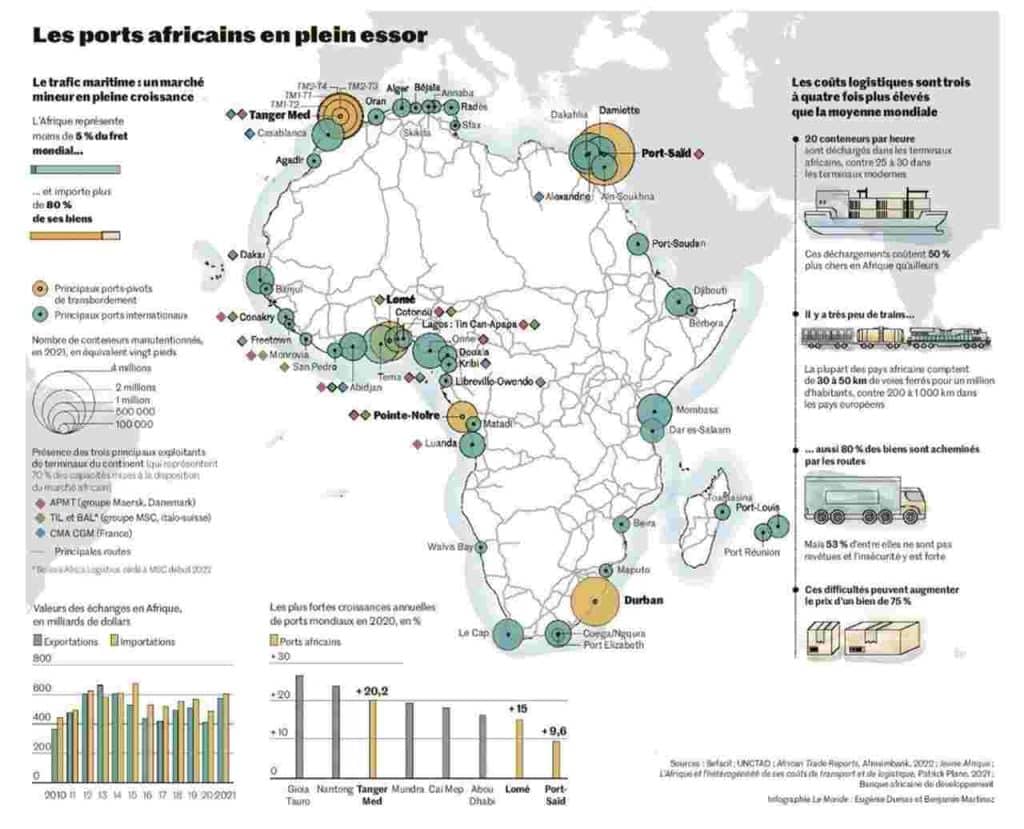
In fact, lately the Chinese economy has evolved from growth based on exports to other countries, to an economy based on domestic consumption, to improve its standard of living, and investment abroad. The BRI materialized in a dozen ports around the Mediterranean, such as Piraeus in 2008 or Cherchel in Algeria in 2016.
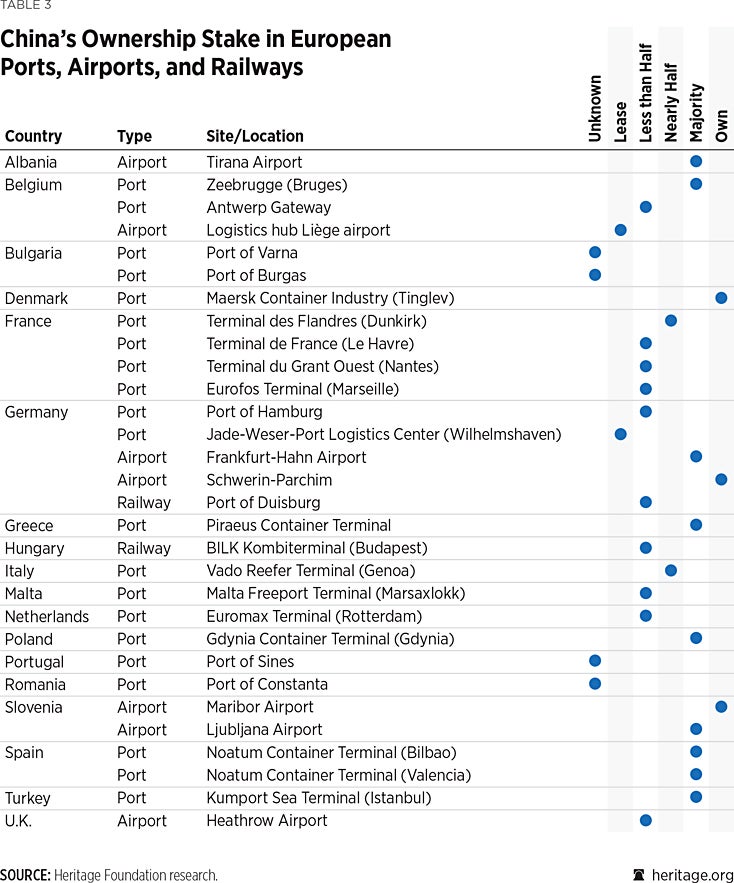
China wants to commit many European countries to the maritime and land components of the BRI, which should converge. In Venice, passing through Greece, Italy or even Spain. In recent years, Chinese companies, COSCO in particular, have invested in Piraeus, Cherchell, Port Said and Alexandria, Ashod and Haifa in Israel, the Kumport terminal at Istanbul’s Ambarli airport, and the ports of Savona, Trieste , Genoa and Naples. It has shown interest in other ports in Portugal or Spain, among others, and a desire to create a huge industrial complex attached to the port of Tangier.
In some cases they obtain shares of the port infrastructure as a whole, in the case of Piraeus with the commercial port, or in other cases certain maritime terminals such as in the case of Savona and Port Said, and in others, they are only investing in port operators, responsible to design, build and operate terminals. For example, “China Merchants” is 49% responsible for operating 14 terminals in four Mediterranean ports, which can influence everything that enters and leaves them.
Among the different forms of participation, China has influence over 96 ports, the last being Hamburg and the Solomon Islands. Soon probably in Cyprus. It is also significant that China leads the world in merchant shipping tonnage, comprising container ships, oil tankers, gas carriers, and coal and grain carriers. China builds 90% of the world’s container ships and 80% of port cranes.
The Chinese are also financing rail connections from Piraeus to Belgrade and Budapest, which would reduce transport times from the Suez Canal, whose expansion in 2015 allowed for increased traffic between the Mediterranean Sea and the Red Sea. Goods brought to ports can be stored and handled in industrial zones built by Chinese companies and/or transported to other destinations via BRI freight lines.

Submarine Cables
Concurrently with investments in infrastructure, they also invest in another type of infrastructure, submarine cables. Clearly, the 2015 BRI action plan explicitly mentions telecommunications and submarine cables as a priority sector for future investments. Companies such as Alcatel Submarine Network have previously invested in submarine cables. Since 2008, “China’s Huawei Marine Networks” has invested capital heavily, surpassing Alcatel. China laid the Hannibal cable in 2009, which connects Tunisia with Italy and another in 2010 that connects Libya with Greece. It is very likely that this type of commercial competition will continue in the Mediterranean and around the world, since, with more than 300 active cables on the planet, this sector is still developing and with growing demand. Given China’s global ambitions, concerns arise that Chinese commercial investments will be used for non-commercial purposes, such as intelligence collection and naval/military cooperation in the Mediterranean. Thus, in the port of Hambantota (Sri Lanka), local authorities complained that the Chinese insisted on the need for the port to monitor all commercial traffic there, as a task of intelligence collection. By law, China requires all its companies, whether public or private, to collect intelligence and report to the Chinese government, which is why it is very important to know what type of information is collected from the ports. Likewise, China prohibits the dissemination of this information. Many ports around the world use the Chinese LOGINK software, which extensively monitors maritime trade, giving them a good understanding of the deficiencies and vulnerabilities of Western supply chains. Many ports also use 5G communications towers, in addition to China providing ports with operating systems and computers for port infrastructure. Chinese warships regularly dock at Chinese-operated ports, which is vital for their replenishment and repairs, which is why they are improving the military interoperability of all these ports. Chinese warships have already docked in at least 1/3 of the ports in which China has a stake.
People exchanges
The Chinese consider that communication between different civilizations is necessary. Algeria has 50,000 Chinese workers, one of the largest Chinese communities in Africa. Likewise, Chinese restaurants and markets emerge in Casablanca, which is the commercial node of Morocco. 4000 Chinese residents live in the Derb Omar business district of Casablanca.
In addition to these residents, Chinese tourism to countries such as Morocco and Egypt has skyrocketed as visa restrictions have been lifted or notices advising against travel to these countries have disappeared. Another element that contributes to communication between different civilizations has been the Chinese cultural institutions in North Africa.
The first Confucius Institute was inaugurated in Tunisia in November 2018, while the Chinese cultural center in Rabat did so in December 2018. In Egypt, two Confucius Institutes were established at Cairo University and Suez Canal University, as well as a Chinese cultural center. These cultural institutions organize Chinese language and culture classes, as well as festivals. Taken together, the growing number of Chinese residents, tourists and cultural institutions in North Africa show an effective and expanding form of China’s so-called soft power application. But not all have been successes, there have also been failures.
Among them the exploitation of cheap Chinese labour for infrastructure construction, which questions the support for the local labour market or the contribution to the economic prosperity of the host country. This practice has generated resentment in some countries and questioned its lack of transparency and legal regulation. Thus, abuses and corruption scandals have been reported in the construction of the east-west highway in Algeria. Likewise, among the risks of dealing with China are the negative effects of debt diplomacy and neocolonialism in South Asia, Africa and Latin America. Cases such as Pakistan, Sri Lanka and Ecuador are cases of debt default, which has given China disproportionate leverage in its claim, sometimes with disastrous consequences for debtors.
COVID 19
The pandemic called COVID 19 took the world by surprise in 2020. In China, the authorities acted with efficiency free from legal restrictions: they isolated urban centers, built hospitals, mass produced essential medical equipment, such as personal protective suits, masks and ventilators for assisted breathing. In the first moments, Chinese airports were closed, however, it was already too late for Chinese travellers in transit around the globe infected by the virus. In April 2020, although China had already contained the pandemic in its territory, it had spread it at an unprecedented rate throughout the world. COVID 19 became a public health emergency of global reach. It also affected relations with China due to its lack of transparency and how it managed the virus during the initial days of the pandemic. Indeed, the Trump administration called it the Chinese virus or the Wuhan virus and the international community appealed to the United Nations. USA to investigate the origin of the virus. In any case, the Chinese government began contacting all their partners around the world, including those in MENA, then sent tons of medical supplies and Chinese doctors to help combat the virus. In the MENA it was particularly harsh in Iran, Türkiye and the Gulf region. North Africa was less affected, although these countries, in addition to being among the most infected in Africa, generally had a health service to deal with crises. In March 2020, China began sending supplies to every country in North Africa, including Libya. China sent a series of ships with medical supplies to Egypt, supporting the shipment with teleconferences between Chinese and Egyptian experts to exchange experiences. It also sent health supplies to Algeria through the “China State Construction Engineering Corporation”, which operated in Algeria. It can be said that China organized scientific and research cooperation on COVID 19 in North Africa. As a whole, this pandemic diplomacy changed the discourse that made China the origin of the problem and became part of the solution, taking into account that it sent supplies to 80 countries around the globe, at a time when the United States. In its internal struggle to defend itself from COVID, the US withdrew funds from the World Health Organization (WHO), offering relatively little to mitigate the international impact of COVID 19. Nor was Europe’s aid generous, circumstances that Russia and China took advantage of to fill the care gap. In short, COVID 19 affected China’s international image, negatively for Europe and the US and positively for North Africa, helping it consolidate its partnerships in the southern Mediterranean, to which is added the latter’s expectation of for China to defend its interests in international forums.
Relations with southern Europe
The Chinese speak of southern Europe or northern Africa and both subdivide them into regions. That is why it can be said that they do not consider the Mediterranean region as a whole. In Europe they do not have an intersectoral organization, rather they plan bilateral cooperation with six countries: Italy, Greece, Portugal, Spain, Cyprus and Malta. More multilaterally in Europe, they created the 16+1 China-Central and Eastern Europe forum. It can be said that the cooperation forums promoted by China rival the political framework defended by the European Union, both in Europe and in its neighbourhood. China has conceived a basic cooperation mechanism that covers the entire world, creating forums that are actually an end in themselves, regardless of their content, since they consider that to be foreign policy: Forums and summits, and international actors that they find each other. In Europe, the Chinese are not trying to incorporate France, the United Kingdom, or Germany into this type of mechanism. France, a former colonial power, considers China a powerful economic partner and systemic rival at the same time. In reality, they want to bring together small and medium-sized countries that, led by China, have greater weight than the large ones, at least in certain areas. They would like, through Greece, to create synergies or complementarity at least with the Greek format of the summit of Mediterranean countries of the EU. In February 2013, Beijing organized a conference convening representatives of the Ministries of Agriculture, with several ministers from six European countries and China with the intention of strengthening cooperation in agriculture among the participants. In November 2015 in Xiamen (China), another forum was organized with these six countries for maritime cooperation. Since then and until now, China has developed Global Maritime Cooperation with these six countries, including the construction and development of ports, industrial zones, transportation networks, tourism and fishing. Faced with the opposition of certain governments of European countries, particularly Italy and Brussels, for the possible institutionalization of these cooperation mechanisms that do not include the EU and all Mediterranean countries, the Chinese have thought about flexible mechanisms that attract businessmen and society. civil society (universities, think tanks, NGOs…) easier to commit than the governments themselves. With this they try to avoid central governments, creating multilateral cooperation platforms in certain sectors that they consider key, such as telecommunications, electronic commerce, maritime or green economy, representatives of ports, research centers, etc. However, Italy was the first European country to join the BRI on March 23, 2019, but today President Meloni has decided to leave the agreement after verifying that China benefited much more than Italy from it. During the 2008 crisis, Portugal, which has historical relations with China through Macau, signed an MOU with very vague content with China and is also currently withdrawing from it for reasons of cohesion with NATO and the EU. Portugal was the gateway to Chinese trade to a Lusophone population of 280 million inhabitants around the world and to the greedy logistics port in the Azores, especially in the port of Lajes that would connect the Mediterranean with its Atlantic ambitions. China wants the consolidation of these sectoral forums to strengthen political and economic cooperation, which can also serve as a springboard to reach other areas of cooperation such as new technologies, transportation or agriculture. As for Spain, the Spanish authorities have shown great concern about the implementation of the BRI in our territory, about Chinese investments in Spain and the vulnerability of the security of the 5G technology installed in Huawei, which has generated distrust. The influence of NATO and the EU in relations with China, to the extent that Spain belongs to both organizations, has led to conditional cooperation, to better monitor Chinese behaviour, and thus mitigate unwanted effects. However, Spain has Chinese participation in the ports of Bilbao and Valencia, as well as in the Dry Ports of Coslada and Zaragoza.
China’s relations with North Africa
China relates with North African countries primarily through bilateral forums, but increasingly wants to do so through multilateral forums such as the Forum for China Africa Cooperation (FOCAC), created in 2000, and the Forum for Sino-Arab Cooperation, born in 2004. Bilateral diplomacy follows two models, the Strategic Partnership (SP), and Comprehensive Strategic Partnerships (CSP). SPs cannot be qualified as treaty-based alliances or coalitions. Rather, they are oriented towards achieving objectives in areas of economic cooperation, culture, security and technology. CSPs represent a higher level of institutional communication. A CSP agreement must be preceded by political trust, deep economic ties, commercial exchanges, and good relations in other sectors. They only have CSPs with Egypt and Algeria, which are two middle powers of notable regional and international importance. Morocco has only one SP. China’s ties with North African countries rely heavily on trade, infrastructure construction, including port infrastructure, shipping, financial cooperation, tourism and manufacturing. Normally, China’s relations with North Africa are developed within the framework of its policy of non-interference in internal affairs, in clear contrast to Western countries. That is why these countries see China as a viable and alternative partner to the US, which leads them to deal with China with confidence not only in economic and cultural matters, but also to seek advice on defense matters.
All of this favours the legitimization of the Chinese development model. Countries like China and Russia are unlikely to replace the EU and the US in the near future, and to the extent that the US distances itself from them, the EU will lose the support of its key security partner. The direct consequence of this possible disaffection would be the loss of Western capacity to influence the security dynamics in the Southern Mediterranean. Many MENA countries consider themselves victims of the Western hegemonic order, regardless of their historical ties. China never colonized them nor ever interfered in their internal affairs. On the other hand, China’s regional and international expansion seems logical to them due to its economic weight, which leads them to accept the BRI and a greater presence of China in general. But we must not forget that non-interference and neutrality are not always options for China. The greater China’s involvement in the region, the more actively it will be called upon to resolve regional disputes. That is why China will not be able to ignore the conflicts in Western Sahara and the Libyan war as much as they would like. In particular, China is fostering relations with Egypt, Algeria and Morocco with economic strategies that differ from country to country. China incorporates the BRI into the Maghreb, including Mauritania.
Relations with Egypt and Algeria
China’s relations with Algeria and Egypt began at the time of the anti-colonial struggle. China was the first non-Arab country to recognize the National Liberation Front (FLN) of Algeria in 1958. China’s interest evolved from revolutionary romanticism to economic and strategic interest towards the end of the 20th century.
The CSPs of Algeria and Egypt were signed in 2014. The effects of these agreements in Algeria and Egypt translate into a strong diplomatic and security partnership that includes trade, infrastructure projects, with China being the largest trading partner of both countries. In terms of security, it is reflected by the sale of weapons, military assistance and in the case of Egypt in joint naval exercises. Algeria is Europe’s largest oil and gas supplier, as well as a key economic and security player in the Mediterranean, North Africa and Sahel region. It has the largest military budget in Africa, which allows it to be a provider of regional security. It has mediated conflicts such as Mali and Libya, and historically is the gateway to the rest of Africa, as well as regional blocs such as the African Union.
Algeria is the country with the closest relations with China. In Algeria, Chinese companies are mainly interested in building construction and the energy sector. Projects such as the Opera House, the Great Mosque of Algiers, and the east-west highway mark the activity of thousands of Chinese workers who have settled in the Chinatown of the suburbs of Algiers. Meanwhile, Egypt controls the most important maritime arteries in the world, the Suez Canal, which is also becoming the most important gas node in the Eastern Mediterranean. It is also a regional security provider, with one of the largest armed forces in Africa. In part, the Strategic Partnership was emptied of content when Beijing began to shift the priority of the BRI from North Africa to the Persian Gulf.
China and Egypt, as countries hinged between Asia and the MENA, want to remodel the structure of the world order, and to do so they pursue multipolarity and solidarity with emerging powers. Egypt was the first African Arab country to recognize the Chinese Communist Party (PRC). For its part, China is Egypt’s largest trading partner. In Egypt, the Chinese are showing growing interest in building and financing projects in the new administrative capital, in the Suez Canal economic zone, and other industrial areas of the country. Egypt is having trouble attracting foreign investment, but Chinese construction projects are on the rise.
A success has been the creation of a working group led by the Egyptian Chinese branch of the fiber optic company “Jushi” in the Suez Canal economic zone, which has allowed Egypt to be one of the leading countries in production. of fiber optics in the world.
Morocco
The SP of Morocco was signed in 2016. Chinese activity in Morocco is above all economic and cultural. Activity in both Morocco and Egypt is concentrated more in industrial zones, tax-free zones, and financial centers. Morocco is home to the Atlantic duty-free zone in Kenitra, the financial city of Casablanca and the Tanger Med Port complex. In the latter complex, Chinese companies, including telecommunications giant Huawei, are considering establishing regional logistics centers. In March 2017, King Mohammed VI announced plans to establish the new Mohammed VI Technology City in Tangier, which is expected to be the largest Chinese investment in North Africa and comprising several industrial zones. To this end, several Chinese companies signed a memorandum with the Moroccan bank BMCE. Construction of the technology city began in 2019. Following this, several Chinese automotive companies such as BYD, Citic Dicastal and New Technology Aotecar signed agreements with the Moroccan government to build several vehicle manufacturing and assembly plants.
Libya and Tunisia
China has signed MOUs with Libya and Tunisia, but does not have any formal partnership with them. Chinese cultural centers and Confucius institutes have been established in the North African region as governments have lifted visa restrictions on Chinese tourists, allowing tourism to grow rapidly. There are many Chinese firms that have left Libya because of the war. Before 2011 there were many interests in Libya: 75 companies, 36,000 Chinese employees building 50 infrastructure projects. China is leaning more towards the UN-recognized Western government (GNA) that still controls the Central Bank of Libya, making it a viable partner for signing contracts with Chinese companies and Beijing. In Libya, oil exports to China have doubled since 2017, and China is also waiting for the economic opportunities that the reconstruction of the country brings. In 2018 he signed an MOU with the GNA opening the way to join the BRI. Still, China is not in favour of either side of the conflict, which positions him well to do business with both. In the East, Haftar receives the support of Egypt and the Saudi Arabia-UAE axis, in addition to Russia, which also supports Libya militarily with mercenaries. With this coalition Hafter attacked Tripoli in 2019, but was repelled by the GNA with the support of Turkey Chinese support for the GNA notwithstanding, China has left trade options open with Haftar. In fact, there are state companies that have signed projects in 2016 with Eastern Minister Thinnis. Unlike Russia, its relationship with eastern Libya is strictly economic. China is avoiding self-determination issues because of its own problems such as Taiwan, Xinjiang, Tibet and Inner Mongolia. That is why China is passive with regional conflicts. Avoid adopting a more active profile in the Libyan conflict, unlike countries such as Russia, Turkey and Egypt. Since the fall of Gaddafi, China has followed a policy of non-interference with Libya. Trade between Tunisia and China has increased, with exports to China occupying third place in the country after exports to France and Italy. However, China sees investments in Tunisia as risky due to the fragility of its democratic transition and unreliable economy.
The European Union in North Africa
For its part, the EU, in its foreign policy with the southern shore, tries to expand principles such as human rights, freedom, the rule of law and democracy, which it promotes by fostering its relations and through dialogue, but this does not always give the results desired. African countries go to the highest bidder, without opting for any, maintaining good relations with both China and the West. Regarding China’s relations with the EU, China abides by its principles of non-interference in its internal affairs, and rejects that the EU wants to impose its values on it. Of course, China’s growing presence in North Africa affects and conditions EU relations. Over the years the EU has increased its presence in North Africa, which has led to a transformation from being almost exclusively a normative power, only to applying so-called soft power to promote its values and with them stability, to begin to be a geopolitical actor, beginning to consider the application of coercive power.
The Chinese Defense sector in the Mediterranean
In May 2015, China carried out important manoeuvres in the Mediterranean with the Russians that lasted 10 days. It was the first time that the Chinese navy exercised in such militarily congested waters. China wants to do as many exercises as possible with as many countries as possible to learn from them and train its navy, and thus be able to become a maritime power. It says this in its defense white paper of May 2015. In reality, China and Russia have been carrying out exercises since 2012. In September 2016 in the South China Sea, a year after the Mediterranean naval manoeuvres, and in July 2017 in the Baltic Sea. But little more. China is aware that it must be able to evacuate its citizens in the Mediterranean or anywhere, as it did in Yemen in 2015 or Sudan in 2023. In Libya there were more than 35,000 Chinese citizens at the beginning of the crisis. I could not have done it without the help of European countries, especially Greece, the country through which most of the evacuees had to pass. China is aware that its naval force must be present to carry out new evacuations. After the opening of a base in Djibouti, it is not ruled out that it wants to open a new one in the Mediterranean region. China has carried out some military exercises in the Middle East and has taken part in anti-piracy operations in the Indian Ocean, to a much lesser extent than other countries such as France, the UK. and the U.S. Gulf monarchies such as Saudi Arabia and Qatar have slowly worked to shape political and security relations with China, perhaps to unsettle the U.S., although parity at sea with the hegemon global is still a long way off. China sells weapons to North African countries but to a lesser extent than Russia. Its main clients are Algeria, Egypt and Morocco. To Algeria it sells UAVs (CH-3 and CH-4A), warships (C-28A and Type 056), missiles (to equip frigates and CH-3 UAVs), artillery, armored vehicles and sensors. Apart from this, it hires Chinese security companies (PSCs). It sells Egypt 4 submarines of Chinese origin, a flight simulator, UAVs (Wing Loong-1) and Missiles (to equip the UAVs). To Morocco it sells UAVs (Wing Loong II), air defense systems (Sky Shield), SAM Missiles (Sky Dragon), Anti-tank Missiles (Red Arrow 8) and Battle Tanks. In Libya, China has Private Security Companies (PSCs) to protect its projects.
Final Considerations
The Mediterranean is the crossroads between three continents: Africa, Asia and Europe. Whoever controls the Mediterranean has access to the oil resources of the Persian Gulf, the emerging economies of Africa, the military power of NATO, and the economic engine of the EU. It also gives access to the Middle East and sub-Saharan Africa, without forgetting the energy resources of the Eastern Mediterranean.
Chinese investments in the Mediterranean region are proportional to the importance of the European market in China. China’s largest trading partner is the EU. The reduction in navigation times and costs makes Chinese imports competitive in the European market, where 80% of traffic between China and Europe passes by sea. However, these investments raise friction given their entity and nature. Investments in satellite facilities, submarine cables and ports, and particularly the purchase of some of them will make it possible to develop non-commercial activities in the future, such as hosting naval forces or intelligence collection. They also raise new questions in terms of strategic independence. For example, today Chinese companies have the ability to restrict entry into certain ports or access to certain undersea cables (and therefore access to the Internet) if they or the Chinese government so wish. These concerns are based on the fact that a large part of Chinese investment is made by state companies, and that private companies must maintain a close relationship with the state, given the nature of the Chinese political and economic system. At the same time, Xi appeals to the patriotism of strategically important commercial actors. Xi counts on all national actors to achieve his political goals. Chinese activism also raises questions regarding the implementation of maritime standards, contemplated in the 2017 action plan. Its maritime presence raises a series of economic questions: the port of Piraeus as an entry point for Chinese products to Europe, the way in which Chinese investments in transport infrastructure are beginning to affect business in other traditional logistics and port nodes in area. All of this will lead the EU to define a new strategy for its relations with China. On the other hand, given China’s vision of treating civilian port facilities as an extension of its powerful military instrument, the consequences of this in the event of war benefit them greatly. Even if it is only to delay or deny the shipment of materials from their opponents and not only to acquire information. In broader terms, they can selectively condition the world economy, without the need to occupy ports or block straits. For this reason, it is necessary to have a complete vision of the network of Chinese connections in infrastructure, hardware and computer software to assess the vulnerability of one’s own supply chain.
Many Maghreb countries consider China as a power that serves as a counterweight for negotiation, in the face of proposals from foreign companies, and as a counterweight to French, European in general and North American influence. China’s commercial influence in the Maghreb favours the legitimization of its development model, the good reception of its principles of non-interference in the internal political affairs of its partners, in contrast to the West that appeals to liberal and democratic norms for the internal governance of the North African countries.
China can cooperate with Russia in the Middle East to the detriment of the US and Western Interests. For its part, Russia is trying to increase its presence and influence in the Middle East. Not coincidentally, Russia proposed a security architecture in the region that consisted of an anti-terrorist coalition in the region to avoid permanent deployments of troops from extra-regional states in the Gulf. A clear reference to the USA, France and the UK. Russia and China do not have the capacity to establish regional security arrangements, but in the long term they can thwart US and European interests in various parts of the MENA region, including North Africa. Countries like Egypt and Morocco, important allies of the US during the Cold War and the War of Terror, and now Morocco with the Abraham Accords, are opening more and more towards emerging economic powers such as India and Turkey, and to more oriented state actors. security like Russia.
To the extent that the US is absent from the international arena, and damages its own relations with its strategic alliances with Europe, the more quickly China and Russia will occupy the power vacuum. Ultimately, the Chinese have their sights set on strategic sea lanes, emerging markets, and new security alliances and the Mediterranean has all of these attributes.
References:
EHTESHAMI, Anoushiravan, China’s Foreign Policy towards the Mediterranean, IEMed Mediterranean Yearbook 2023, p.5. Available: China’s Foreign Policy towards the Mediterranean : IEMed
CHANG, Gordon G, China in the Mediterranean, Hoover Institution, January 10 2021, p. 2. Available: China In The Mediterranean | Hoover Institution China In The Mediterranean
CHAZIZA, Mordechai, Cyprus: The Next Stop of China’s Belt and Road Initiative, The Diplomat, December 22, 2021, p.2 Available: Cyprus: The Next Stop of China’s Belt and Road Initiative – The Diplomat
Action Plan ode Belt and Road Initiative, Chinese Government, March 30, 2015, Available: Initiative offers road map for peace, prosperity (www.gov.cn)
VAZQUEZ, Malte. How China uses shipping to monitor and control, Foreign Policy, September 20, 2023, p.1. Available: https://biz.crast.net/how-china-uses-shipping-to-monitor-and-control/
GHAFAR Abdel and JACOBS Anna L. ,CHINA IN THE MEDITERRANEAN: IMPLICATIONS OF EXPANDING SINO-NORTH AFRICA RELATIONS, Brookings-Global China, July 2020, p.7 Available: China in the Mediterranean: Implications of expanding Sino-North Africa relations (brookings.edu)
EXPOSITO GUISADO, Josué, El Impacto Geopolítico de China en el Mediterráneo y Oriente Medio, IEEE, 7 de octubre de 2021, p.3 Available: El impacto geopolítico de China en el Mediterráneo y Oriente Medio (ieee.es)
[1]GHAFAR Abdel and JACOBS Anna L. ,CHINA IN THE MEDITERRANEAN: IMPLICATIONS OF EXPANDING SINO-NORTH AFRICA RELATIONS, Brookings-Global China, July 2020, p.7 Available: China in the Mediterranean: Implications of expanding Sino-North Africa relations (brookings.edu)
Italy, largest economy to sign China’s Belt & Road pact, weighs how to exit the initiative | DW News (youtube)
SHERIDAN, Michael, Portugal Steps Off the Silk Road, CEPA, September 8, 2023, p.1 Available:
Portugal Steps Off the Silk Road – CEPA
GHAFAR Abdel and JACOBS Anna L. ,CHINA IN THE MEDITERRANEAN: IMPLICATIONS OF EXPANDING SINO-NORTH AFRICA RELATIONS, Brookings-Global China, July 2020, p.3 Available: China in the Mediterranean: Implications of expanding Sino-North Africa relations (brookings.edu)
XINHUA, “China’s Jushi firm celebrates largest fiberglass production in Egypt,” Xinhuanet, August 29, 2018, Available: http://www.xinhuanet.com/english/2018-08/29/c_137426120.htm
GOMEZ, Alvaro, Inversiones chinas en el Mediterráneo: enclaves estratégicos e infraestructuras, Descifrando la Guerra, 24 de Enero de 2021, p.4. Available: Inversiones chinas en el Mediterráneo: enclaves estratégicos e infraestructuras – Descifrando la Guerra
EKMAN, Alice, China in the Mediterranean an Emerging Presence, L’IFRI, Feb 2018, p.19. Available: https://www.ifri.org/en/publications/notes-de-lifri/china-mediterranean-emerging-presence
Mapping Chinese and Russian Military and Security Exports to Africa | RAND Corporation
KUO, Mercy, China and the Mediterranean: Geostrategic Context and Contest, The Diplomat, March 04, 2020, p.2. Available: China and the Mediterranean: Geostrategic Context and Contest – The Diplomat
EKMAN, Alice, China in the Mediterranean an Emerging Presence, L’IFRI, Feb 2018, p.18. Available: https://www.ifri.org/en/publications/notes-de-lifri/china-mediterranean-emerging-presence
European Parliament, ‘Parliament sets out its vision for a new EU strategy on China’, 16 September 2021. Available: Parliament sets out its vision for a new EU strategy on China | News | European Parliament (europa.eu)

 Global Strategy
 Javier Mª Ruiz Arévalo
 Samuel Morales