 Pablo Cadahía
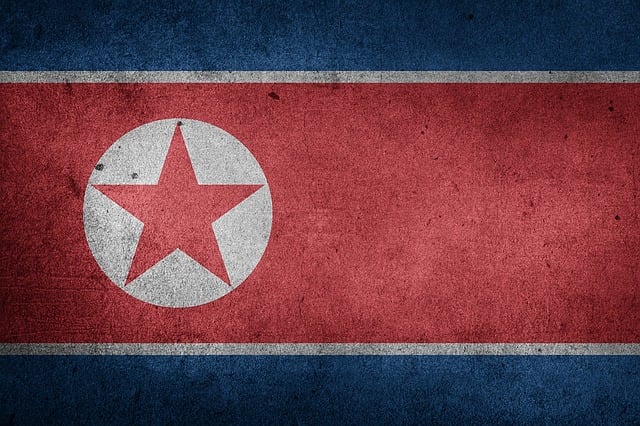
2024 has been a year characterized by the number of conflicts that continue to be open worldwide. The war in Ukraine now lasts for more than 1000 days and counting, tensions in the Middle East continued to rise with the Israeli offensives against Hezbollah, and with Iran continuing to be in the spotlight. In recent weeks, the rapid advances of anti-Assad forces in Syria with the implicit support from Turkey threaten to extend the conflict in the region even further. Finally, the participation of North Korean soldiers in the Russian war against Ukraine highlights the importance of an issue that has been marginally covered by the media, and that is the strategic danger that systematically poses the DPRK for international stability, not only in East Asia but also for the rest of the world.
¿Quieres aprender por tu cuenta sobre #geopolítica y estudios estratégicos? Escucha nuestro archivo de #podcast con invitados militares y académicos https://t.co/YZTorgUSME pic.twitter.com/zlCZO6y7BD
— Global Strategy (@GStrategy_es) December 10, 2023
During the Biden administration (January 2021 – January 2025), the regime of Kim Jong Un has continued to adopt harsher rhetoric against South Korea and the US, to modernize its conventional arsenal, and possibly improve its nuclear capabilities. At the same time, there was no publicly known dialogue between North Korea and the US, much less with the ROK. As a new president is set to take office soon, it could be convenient to reflect on the failures and successes of Biden’s policy with North Korea. Therefore, this post will be a short analysis of the strategy of this administration in dealing with the DPRK.
An outline of Biden’s policy for North Korea
When Joe Biden and his cabinet took office in January 2021, there was some speculation that their policy with the recalcitrant regime would be a continuation of the one used by the Obama administration (2009 – 2017), famously named “strategic patience.” This policy basically entailed enforcing sanctions against North Korea, showing an ironclad alliance with the ROK and Japan, and showing a strong deterrent against the North. Ideally, the country was expected to feel the pressure and eventually engage in substantial and sincere conversations over its denuclearization. In the end, this strategy was a total failure, with North Korea conducting four nuclear tests in those years.
To dispel doubts over the possibility of resuming the policy of strategic patience, the Biden administration announced in April 2021 its roadmap to engage with North Korea. The outline of this policy was very vague (as it remains today), but a few important points can be highlighted:
- First of all, the White House would follow a middle path between Obama’s strategic patience and Trump’s “grand bargain” strategy (which implied obtaining great concessions from the North in a few summits between the leaders of the two states).
- Second, a “calibrated, practical approach” would be used. This expression probably meant a more discreet, pragmatic, and diplomat-to-diplomat-level approach. Renowned nuclear weapons expert Ankit Panda even referred to it as containing “a dose of realism.”
- Third, this policy would be implemented in close consultation with South Korea and Japan. The Biden team has emphasized US allies being on board for the negotiations all the time.
- Finally, this administration did not shy away from employing an approach that valued the importance of deterrence to make sure North Korea does not escalate tensions in the region.
This strategy that acknowledges the importance of allies and conventional diplomacy yielded no results, at least when it comes to conversations with the DPRK.
The White House made various overtures to start the dialogue with the North, sending messages through diplomatic channels, or publicly stating that the United States was ready to engage in conversations with the DPRK “anywhere, anytime, without preconditions.” However, the Kim regime ignored all these offers for dialogue, and conversations between US and DPRK officials never took place.
As time passed with no dialogue, the Biden team even accepted the possibility of interim steps in the process of negotiations. This means that the US would be willing to accept various intermediate deals in which it would make some concessions, such as easing certain sanctions, in exchange for reciprocal gestures from the North to dismantle its nuclear weapons program step by step. Nevertheless, the final goal of the complete denuclearization of North Korea remained the same all along.
No matter how hard Washington tried, Kim Jong Un turned his back on those proposals. For years, his regime ghosted the United States.
The negative outcome of the lack of dialogue between the US and North Korea
Unfortunately, the absence of any engagement allowed the regime to continue with the modernization of its army and military capabilities. The most worrisome development is the reported advance in its tactical and strategic nuclear program. At the Sixth Enlarged Plenary Meeting of the party’s 8th Central Committee, Chairman Kim Jon Un announced North Korea’s plan to develop its own strategic weapons as part of a five-year plan. This implied the development of new tactical nuclear weapons, a new ICBM, hypersonic gliding flight warheads, nuclear-powered submarines, and a military satellite. Although a seventh nuclear test has not been conducted so far, the regime has test-fired various ICBMs and even launched a reconnaissance satellite.
Possibly to compensate for its isolation and shore up support against America, the DPRK has embraced a quasi-alliance with Russia after leaving behind possibly the world’s longest and hardest quarantine from COVID-19. Two encounters between Putin and Kim in September 2023 and June 2024 were followed by the deployment in the Kursk region of up to 10,000 North Korean soldiers, who are feared to enter the fight against Ukraine soon. Not only did the regime send soldiers, but also a tremendous number of rounds of artillery and even ballistic missiles that were already employed against Ukrainian objectives. Pundits are concerned with the possibility of the DPRK receiving Russian assistance for the development of key technologies in exchange for its help in the war in Ukraine. For instance, even though what kind of benefits will Kim receive from Putin, it could get some Russian advice for the advancement of its military satellite, nuclear submarine, and ICBM programs.
On the other hand, inter-Korean relations, which stopped right after the failure of the summit between Donald Trump and Kim Jong Un in Hanoi in February 2019, have become part of the past. After a major parliamentary meeting last January, the North Korean leader referred to his southern neighbors as an “invariable principal enemy,” and vowed to abandon a decadeslong policy of seeking national reunification, eliminating in the meantime all the remnants of previous inter-Korean cooperation, such as reportedly removing references of the Korean Peninsula from DPRK’s anthem after an amendment in October, with the intention of showing that the DPRK and the ROK are two separate states and that there will not ever be any more exchanges between the two Koreas.
Thus, it can be seen that all these serious developments have taken place during the presidency of Joe Biden. However, the White House is not the sole responsible for this outcome. Conversely, there were some positive developments.
Positive aspects of Biden’s approach to his allies in East Asia
It was earlier stated that the Biden administration placed a lot of importance on cooperation with South Korea and Japan, something that contrasted with the Trump presidency, which created some friction with its partners, such as the conflicts over the demands for South Korea to pay more for the costs of stationing the USFK, among other issues. President Biden, on the contrary, held close consultations with the ROK and Japan, and the trilateral alliance strengthened further under his leadership. The allies staged military exercises (which were considerably scaled down or even suspended for years under former president Moon for the sake of inter-Korean dialogue) in a show of deterrence against the North Korean regime.
A very important event was the so-called “Washington Declaration” of April last year, which eventually led to the formation of the Nuclear Consultative Group (NCG). The NCG is an important instrument of extended deterrence that allows the South Korean ally to have a say in the use of American nuclear weapons to protect its core interests in the Korean Peninsula, although the ROK will not have command over their use. So far, three meetings between South Korean and US officials have taken place as part of the NCG.

Not least important was the adoption of the Camp David Principles, a security pact between the United States and its closest allies in East Asia that was adopted on the occasion of a trilateral meeting held in August between President Biden, President Yoon, and Prime Minister Kishida.
Therefore, it has become clear that trilateral cooperation reached an unprecedented level in the last few years, and the image of the three leaders walking together in the presidential vacation residence sends a powerful message to Kim Jong Un that the three countries will stand together against the threat posed by his regime. Political scientist Ian Bremmer even went as far as to say that he considers the Camp David Principles “to be the most significant successful piece of diplomacy of the Biden administration to date”.
Reasons for the absence of dialogue with North Korea on the part of the US
At this point, it would be convenient to discuss the reasons why Biden’s engagement with the DPRK has failed.
To begin with, political considerations have certainly played a role in this failure. Possibly to distance itself from Trump’s personal diplomacy with Kim Jong Un, the Biden administration has refrained from trying to engage directly with the North Korean leader, instead, they relied on more conventional diplomacy. For instance, Vice-president and former Democrat candidate in the presidential election, Kamala Harris has said that she would not “cozy up to tyrants and dictators like Kim Jong-un who are rooting for Trump.” Obviously, political motivations to differentiate her candidacy from the one of her rivals were behind her words.
Another reason for the stalemate in negotiations could be the low expectations the Biden administration had for its diplomacy with the rogue regime. The officials in charge of the conversations with North Korea were aware that persuading the regime’s leadership to give up its nuclear program would be nothing less than a Sisyphean task, even if it were step by step. The White House has too many open fronts in the international arena at the moment, such as the war in Ukraine, the conflict in the Middle East, and its long-term rivalry with China. This way, it is reasonable to think that the Biden administration believes that they are wasting valuable time and resources on a risky diplomacy that is not going to yield any results.
Lastly, it is quite possible that there was no engagement with the North because the White House might simply have concluded that there was not such a need.
To produce advanced nuclear warheads in line with the five-year plan mentioned above, North Korea would be probably forced to conduct its seventh nuclear test, and yet this has not happened, despite analysts speculating about that for years. Notwithstanding its opposition to the approval of additional sanctions for North Korea, it cannot be ruled out that China is in part responsible for the continuous delay of the “ever imminent” seventh nuclear test. This is a bit speculative, but considering the influence the Middle Kingdom has over its neighbor, it would not be a surprise that Beijing has threatened Pyongyang through its diplomatic channels not to conduct the atomic test. After all, neither China nor Russia wants a new nuclear superpower in East Asia that becomes harder to control. They prefer to see the Kim regime as a buffer state that does not allow the United States to set its troops along the Chinese and Russian borders.
In this sense, the officials in charge of the American policy with the DPRK might think that as long as their country avoids the US-China relations spiraling out of control, the country of President Xi Jinping will make sure Kim does not carry out his much-needed nuclear test if he wants to be able to introduce miniature warheads into his ICBMs to attack with them the US mainland. In other words, the North Korean nuclear program will remain frozen de facto for as long as the White House gets well with Zhongnanhai.
Reasons why North Korea ignored Biden’s attempts at dialogue
Of course, the systematic refusal of North Korea to the US proposals for dialogue is largely responsible for the current situation. Some of the reasons for this refusal can be included here:
It is very likely that Chairman Kim Jong Un might have felt humiliated after the Hanoi Summit. For him, it is important to show himself to his people and closest aides as a powerful leader who can obtain substantial concessions from their main enemy. Another failure would damage his reputation, and that is an important aspect of maintaining his grip on power. Therefore, he does not want to take the risk of another summit, not even send his negotiators, unless he is almost certain he can sell his people a big diplomatic win.
It seems that Kim perceives that if he wants to succeed in negotiations with the United States, he has to talk directly with the person he believes is in charge of everything in the country, that is, the President of the United States. Thus, the North Korean leader was interested in the non-conventional, personalist leadership style of Trump. He played with his ego with those famous “love letters” to entice him to make concessions with North Korea. Kim understood that if he convinces the President of the United States, he can strike a good deal. Perhaps, Donald Trump also thought the same. This is the top-down approach that characterized his policy with the DPRK.
Therefore, the arrival of Joe Biden to the White House, accompanied by his more traditional diplomat-to-diplomat level diplomacy, made Kim Jong Un think he could not reach the top leader and play with him as he tried with his predecessor.
Another obvious reason for the North Korean uninterest in dialogue is that the DPRK will never surrender all its nuclear weapons, the most precious guarantee for survival for the Kim family. The North Korean leadership has no intention to negotiate with an administration that has made clear until the last moment that the complete denuclearization of the Korean Peninsula will remain the final goal of the diplomatic process.
Conclusion
To sum up, this analysis has shown that it is hard to argue that the Biden administration’s policy for North Korea was successful. On the contrary, four years of no dialogue with the regime, together with its failure to stop the regime from testing missiles and helping Russia in its unlawful war, portray this policy as a sort of continuation of Obama’s strategic patience.
However, this administration has invested so much effort in strengthening the trilateral alliance between the US, the ROK, and Japan. The Washington Declaration, the NCG, the Camp David Principles, as well as military exercises conducted by the three countries, demonstrate that the Biden team can bring together its two closest allies in the region to cooperate against the systematic threats posed not only by North Korea but also by China and Russia.
Finally, it remains to be seen how the second Trump administration will deal with North Korea. For the moment, reporters have said that the new president will try to resume diplomacy with the recalcitrant regime. For example, the appointment of Alex Wong (who helped Trump organize his summit with Kim Jong Un) as Trump’s deputy national security adviser goes in that direction. Experts, nonetheless, predict that the new administration will find a different DPRK that is much less interested in dialogue. Moreover, the unknown fate of President Yoon Seok Yeol, who abruptly declared a short-lived martial law, adds uncertainty to the political panorama in the Korean Peninsula. If he gets impeached, there is a high probability that the next president will be Lee Jae Myung, known to be a supporter of engagement with the North (although in recent years he has shifted to a more pragmatic approach), but not very aligned with Japan. Lee in the top job could team up with Donald Trump to bring back Kim Jong Un to the negotiation table, but if the relations between South Korea and Japan worsen, this could negatively affect the cooperation between the three allies in terms of security, as it happened with the GSOMIA a few years ago.


 Global Strategy
 Javier Mª Ruiz Arévalo