

 Javier Jordán
In a previous paper I have dealt with the escalation of conflicts in the gray zone where I distinguish several of the phases represented in the following figure below.

The most difficult level to detect is the first one: the shaping [of the environment] in order to create and maintain conditions for exerting power over the rival. The difficulty in distinguishing between this frontier phase and the target of peaceful competition is due to the fact that some of the coercion and influence activities employed here also occur in normal inter-state political contexts.
The literature on gray zone conflict and hybrid strategies – and threats – focuses mostly on Russia, China and Iran. However, it is logical that from a Spanish perspective we wonder if there are cases closer to our borders. Specifically, if certain aspects of the relations between Morocco and Spain can be interpreted from that perspective.
In my opinion, there are two historical episodes that fall within the gray zone. The clearest was the Green March in 1975, which within the process of escalation could be placed in the destabilization phase. Another of a more dubious nature -because we do not know Morocco’s true intentions- was the Perejil islet crisis in July 2002, which I have already analysed in a previous work. In view of the facts, perhaps it was the beginning of a ‘Salami tactic’, as well as a test of the Spanish political will, although to reach a definitive conclusion it would be necessary to know the real motives of the Moroccan authorities.
But what is the current diagnosis?
From a general perspective, Rabat tries to influence the Spanish foreign action using as leverage the control of migratory flow, the anti-terrorist cooperation or the periodic ratification of the fishing agreements with the European Union. That these aspects relevant to Spain are used by our neighbor as a tool of pressure and a bargaining chip is compatible with peaceful competition (white, different from the conflict in the gray zone). Peace is not synonymous with harmony in relations between States.
In this context, the approval a couple of months ago by the Moroccan Parliament of a bill extending its Exclusive Economic Zone overlapping with the Spanish EEZ of the Canary Islands, should not necessarily be understood as an aggressive action typical of the conflict in the gray zone. Such claims and disputes are in line with the normality of peaceful competition as long as they are not followed by unilateral measures. As Beijing does, for example, with the militarization of artificial islets in the South China Sea.
The question of Ceuta and Melilla
However, if instead of the macro perspective we focus on the Moroccan policy towards Ceuta and Melilla, the hypothesis on the configuration of the environment (first phase of the escalation) and the use of hybrid strategies makes sense.
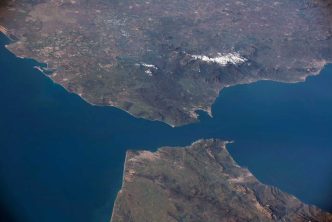
First, because there is a latent conflict. Morocco openly claims possession of both cities, thus becoming the only state challenging the integrity of Spanish territory. Although in 1975 they failed to include both cities in the United Nations list of Non-Self-Governing Territories (pending decolonization), the Moroccan authorities have continued to maintain a revisionist attitude regarding the delimitation of their foundational borders. This position also has repercussions on the delimitation of the maritime spaces in the area of the Strait of Gibraltar, since Morocco does not recognize the territorial waters of Ceuta nor, further east, those of Melilla and the rocks under Spanish sovereignty.

Secondly, because in recent years the Moroccan government has carried out various actions that can be interpreted from a hybrid point of view. Here are the main examples:
- In 2007 the Moroccan government recalled its ambassador in Madrid for consultations as an expression of “rejection” of the visit of the King and Queen of Spain to Ceuta and Melilla. In parallel, the Moroccan monarch Mohamed VI also condemned and regretted the trip of the kings within the Spanish borders.
- In 2010, Moroccan passports of people born in Ceuta or Melilla began to be detected, attributing to Morocco the possession of both cities. In response, the Spanish government ordered the non-acceptance of these passports as invalid. Although their number was relatively small, the Spanish Embassy in Rabat asked the Moroccan authorities to ensure that such events were not repeated.
- Throughout the decade of 2010 there has been a substantial increase -in comparison with the previous decade- in the number of immigrants entering Ceuta and Melilla irregularly by land or sea, with fluctuations from one year to the next. It is true that the difference in per capita income at the border between Spain and Morocco is the second largest in the world (after North and South Korea, which is militarized). So migratory pressure per se does not depend on the will of the Moroccan government. However, the border deployment financially encouraged by the European Union to control the migratory flow provides it with a tool to exert pressure in this way. At the same time, the trickle of news in the media related to the fences of Ceuta and Melilla and the saturation of the immigrant internment centers generates a ‘problematized’ vision of both cities before the rest of Spanish society, which is mostly unaware of other aspects of the Ceuta and Melilla reality.
- In 2018 the Moroccan authorities unilaterally closed the commercial border between Melilla and Morocco agreed in the Spanish-Moroccan Treaty of Fez of 1866 and requested again by the newly independent Morocco in 1956. The decision is intended to favor the port of Nador but was implemented without prior consultation or information to the Spanish government and is having severe consequences on the city’s economy.
- In 2019 the Moroccan government notified its officials of a ban on entering with diplomatic or private passports in Ceuta or Melilla, discouraging them from traveling to the Iberian Peninsula from both cities. In December of that same year it also denied passage to Ceuta to Moroccans with a travel title granted by the Government Delegation in that city.
- In 2019 the Moroccan administration toughened the fight against smuggling crossing the borders of Ceuta. This is a perfectly legitimate measure as this type of ‘atypical trade’ constitutes unfair competition and is allegedly used to launder drug money. At the same time, this measure is seriously damaging the economy of Ceuta, as well as the thousands of Moroccans on the other side of the border who make a living from carrying goods. Another added consequence is the slowing down of the border crossing; something that also penalizes the city economically as it discourages tourism from the other side. Although Morocco undoubtedly has the right to prevent smuggling, one wonders why it took the decision suddenly when the phenomenon had been evident for years, and when part of the consequences fall on its own population without having taken prior measures to moderate its impact. In February 2020, the director of Moroccan customs warned that the measure will also be applied in Melilla as it does not consider its border as a commercial crossing point, but only for people.
- In February 2020 the Moroccan customs authorities vetoed the entry of fresh fish into Ceuta, bought by Ceuta fishmongers in the fish market of Rincón (25 km from the autonomous city), a practice they had been doing for decades because it was cheaper than fish bought in the Peninsula. The Moroccan authorities took this measure without prior notification, which was explained in the Moroccan press as a toughening of the commercial operators exporting to Ceuta.
In short, these actions of a political, legal, diplomatic, economic, cognitive and social nature with direct and indirect effects in these areas are likely to be framed in a hybrid strategy of a non-linear nature.
At the same time, the gradual implementation of these measures, with an eye on the long term (strategic patience), and their moderate level of intensity corresponds to the first phase of the conflict in the gray zone -the configuration of the environment- which, as I pointed out in the previous document, can be prolonged for years while waiting for opportunities to increase coercion and/or influence.
Another element typical of hybrid strategies is the exploitation of the opponent’s vulnerabilities. In this case, in addition to the geographical conditioning factor -Ceuta and Melilla are enclaves limited by the Moroccan border and the sea- which makes it possible to instrumentalize migratory pressure on them and condition their economy, there is also the turbulence experienced in Spanish domestic politics over the last five years: the political bandwidth occupied by the response to Catalan independence and the problems in forming stable governments; in fact, it would not be impossible to rule out that the intensification of the measures listed above is linked to these circumstances.
Other vulnerabilities are the low demographic weight -and political representation- of both cities, as well as the lack of knowledge and interest of Spanish public opinion in matters related to them (except for the problems of migratory control). This reduces their priority and influence as actors in the governmental political agenda, beyond the attention paid to them in the face of specific crises linked to the migratory issue, and generally with the purpose of minimizing their consequences in a reactive manner.
Finally, and without wishing to be alarmist in any way, Morocco’s land, naval and air force procurement program is another factor to be taken into account. On the one hand, its acquisition and maintenance costs are strikingly high in relation to the country’s GDP, regardless of the fact that those in charge consider it a necessary investment in response to Algeria’s military potential. On the other hand, although the Moroccan authorities are not contemplating armed action against the two cities, the fact is that the mere possession of these capabilities gives them an advantage in the face of a hypothetical escalation in the grey zone, especially when neither Ceuta nor Melilla are under the explicit coverage of NATO Article 5, another critical vulnerability. If the conflict escalates, it could further tense the situation by generating serious doubts on the Spanish side about the political and military feasibility of defending Ceuta and Melilla effectively.
In conclusion -and trying to answer the question that heads the post- it is plausible to frame the conduct of the Moroccan authorities with regard to Ceuta and Melilla within a hybrid strategy, framed in the phase of shaping the environment that will allow them to exercise greater coercion in the future.
However, this hypothesis cannot be contrasted with information from open sources because an indispensable element is missing in any hybrid strategy: the integration of the various lines of action. Of course, it is plausible -and I am inclined to think, probable- that such orchestration exists. But without knowing the specific content and ultimate intentions of the Moroccan decision-making process, a definitive assessment remains to be made. In the absence of an intentional policy that integrates – albeit in a non-linear fashion – the various actions listed above, identifying them as hybrid actions would give rise to false positives.
In any case, it may be useful for the Spanish authorities to consider the hybrid perspective when analyzing Moroccan policy towards Ceuta and Melilla. Should the hypothesis be confirmed, the results of the MCDC ‘Countering Hybrid Warfare’ project offer an interesting framework for dealing with hybrid strategies, thus making it difficult for the other side to maintain the initiative.

 Global Strategy


 Ignacio Nieto